ENIVO

Fluid Bed Dryers

Reliable and Efficient Drying Solutions for Industrial Processes

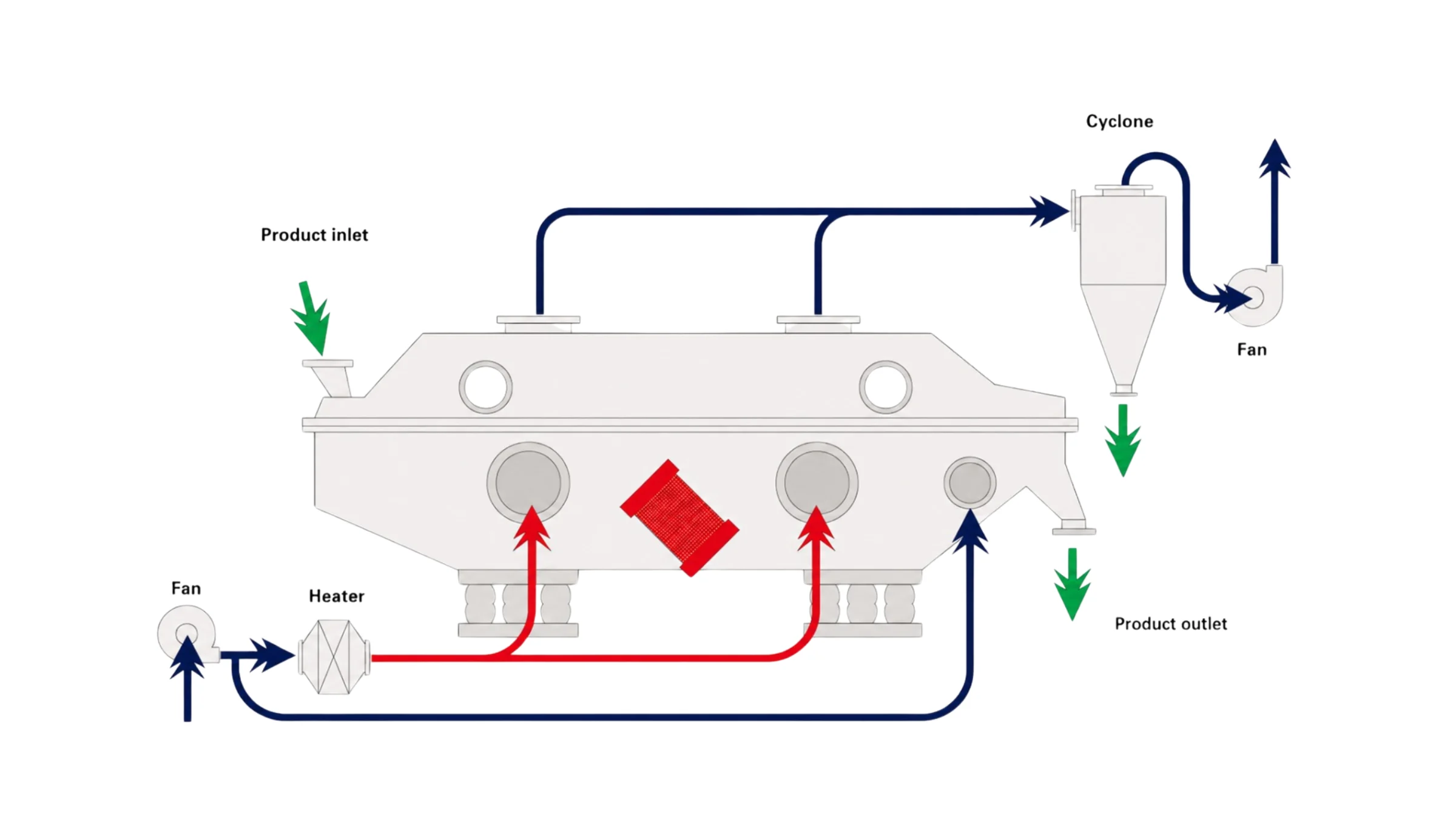
Fluid bed dryers are designed for the efficient and controlled drying of granules, crystals, powders, and similar fluidizable products. In these systems, the product is suspended by air or process gas introduced from below, forming a homogeneous fluidized bed. This creates intensive heat and mass transfer between the product particles and the hot gas. As a result, shorter drying times, more uniform product temperature, and more stable final moisture content can be achieved. Depending on the design, fluid bed systems can also perform drying and cooling within the same piece of equipment, offering a strong process solution especially for granules, crystals, and dry bulk products suitable for fluidization.

Contents

General Approach
Static and Vibratory Fluid Bed Drying Systems
System Types
Technical Overview
Key Advantages
ENIVO Approach

General Approach

Fluid Bed Dryers
General Approach

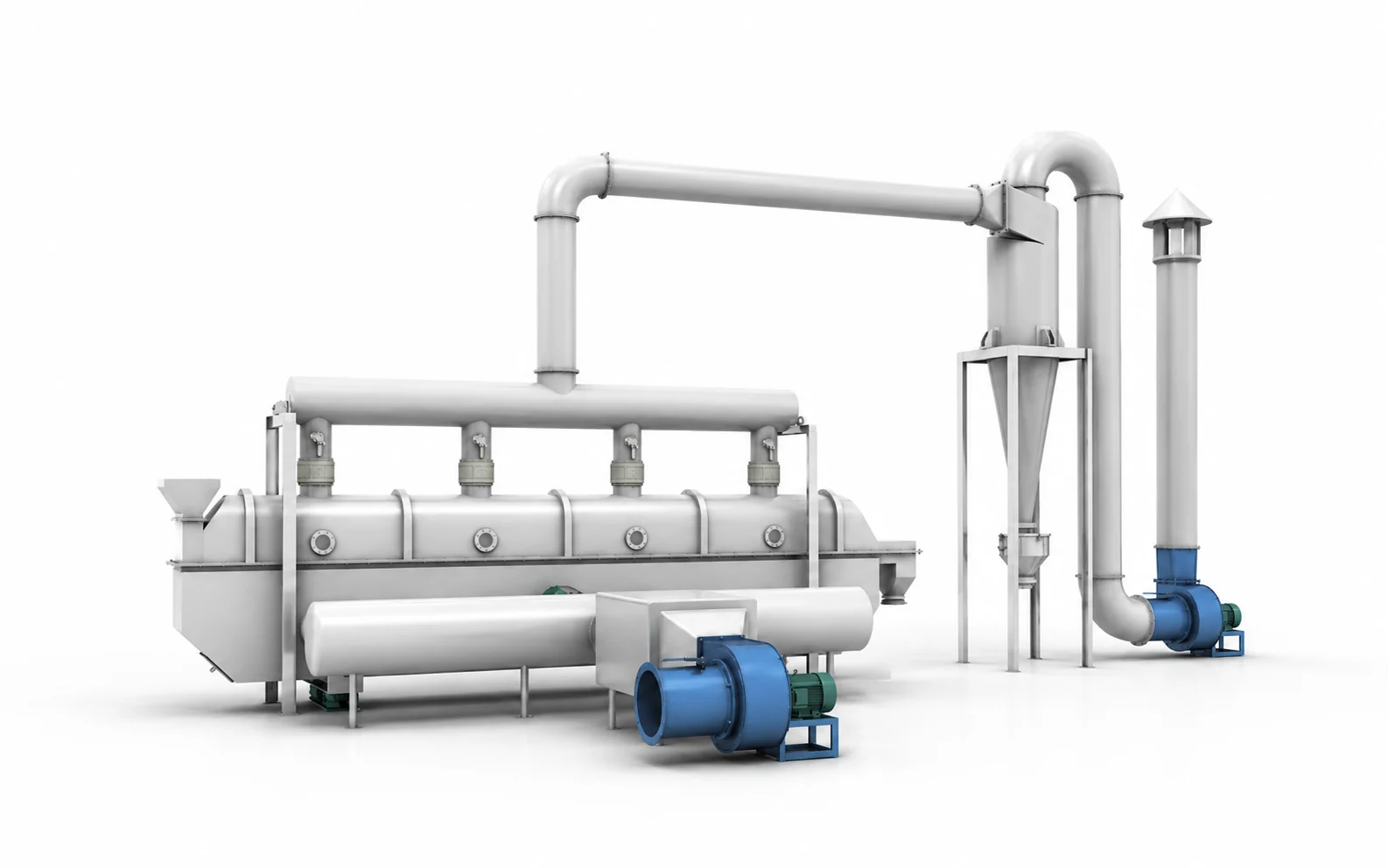
ENIVO approaches fluid bed dryers not simply as drying equipment, but as an integrated process solution that simultaneously manages product behavior, target moisture level, energy efficiency, cooling requirements, and process continuity. A properly designed system supports homogeneous drying, more stable final quality with lower energy consumption, and more controlled feeding of the product to downstream processes. Fluid bed dryers represent a strong alternative especially for granules, crystals, and fine products suitable for fluidization, offering high thermal efficiency, gentle product handling, and flexible process control.

Operating Principle

Fluid bed dryers are designed for the efficient and controlled drying of granules, crystals, powders, and similar fluidizable products. In these systems, the product is suspended by air or process gas introduced from below, forming a homogeneous fluidized bed. This creates intensive heat and mass transfer between the product particles and the hot gas. As a result, shorter drying times, more uniform product temperature, and more stable final moisture content can be achieved. Depending on the design, fluid bed systems can also perform drying and cooling within the same piece of equipment, offering a strong process solution especially for granules, crystals, and dry bulk products suitable for fluidization.

Static and Vibratory Fluid Bed Drying Systems

Fluid Bed Dryers
Static and Vibratory Fluid Bed Drying Systems

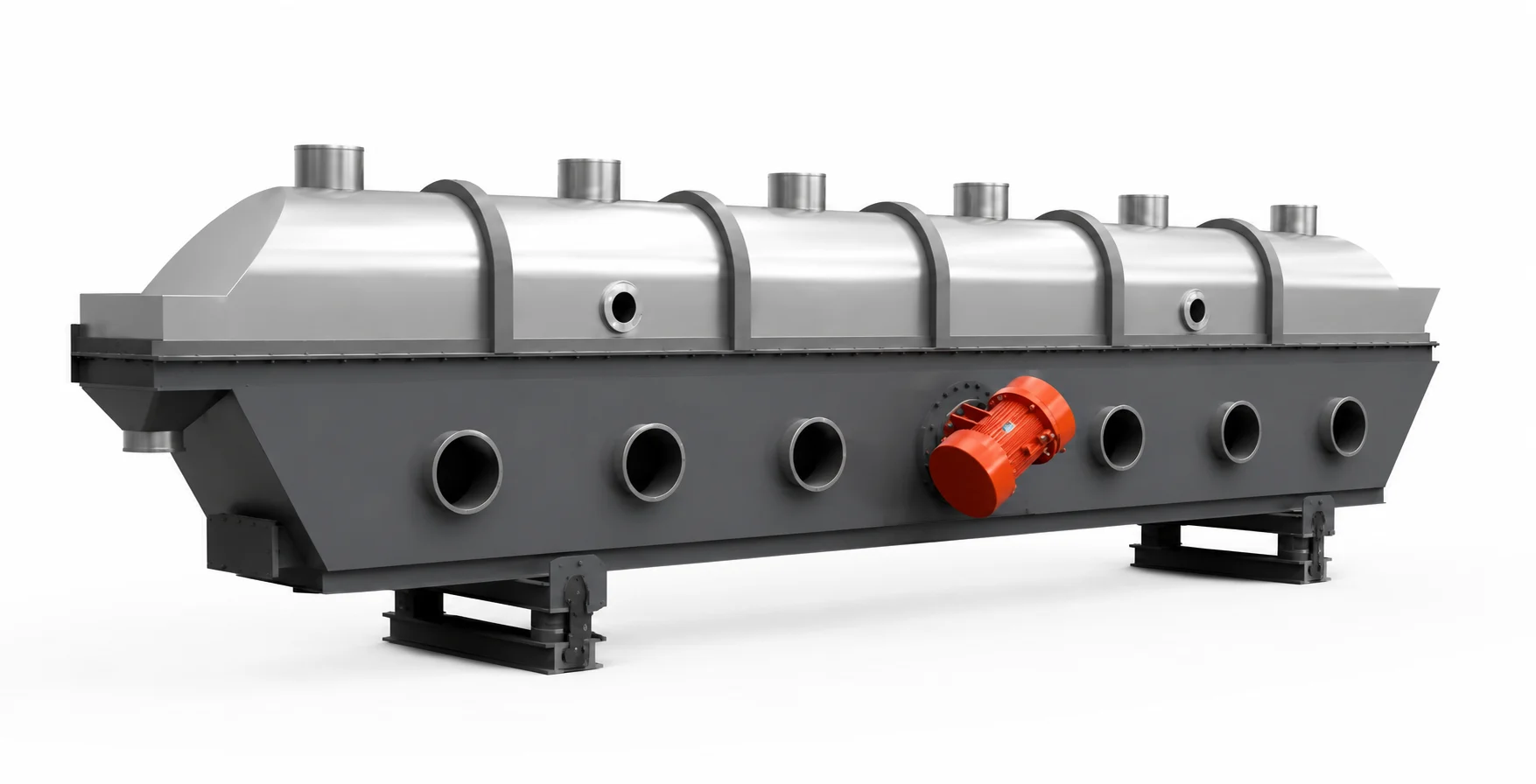
The fluid bed drying principle is based on fluidizing product particles by means of a gas stream introduced from below. This structure allows the product to be distributed more uniformly throughout the bed and to come into more effective contact with the drying air. Depending on the application, either static or vibration-assisted fluid bed dryers may be preferred. Static systems are particularly suitable for products that fluidize easily and have a relatively uniform particle size, while vibratory systems deliver better results with products that have higher moisture content, are more difficult to fluidize, or have a broader particle size distribution. Vibration helps reduce agglomeration and supports more stable product movement through the bed.

System Types

Fluid Bed Dryers
System Types

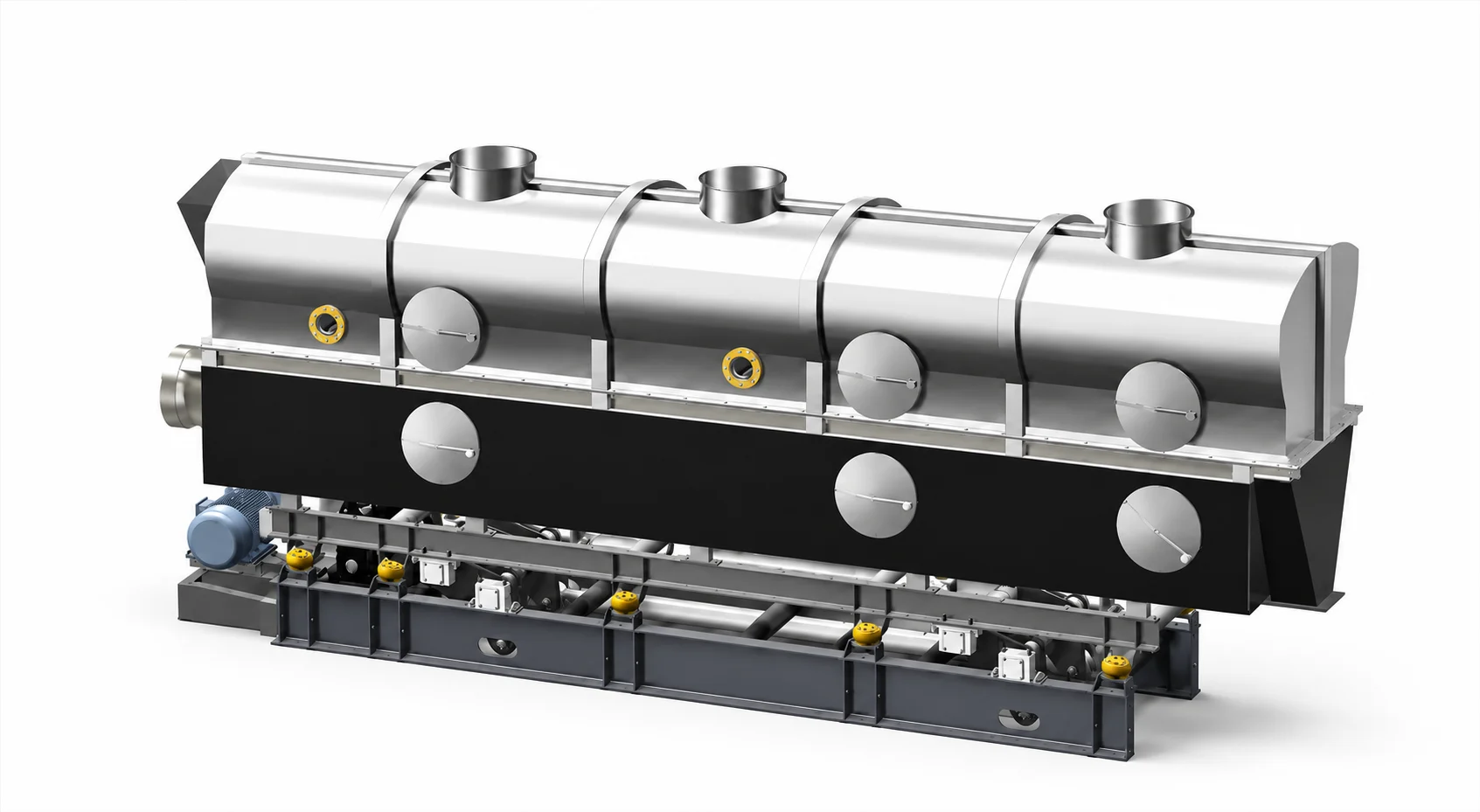
Static Fluid Bed Dryers: Static systems operate without mechanical drive and allow the product to progress through the bed by means of airflow alone. They are especially preferred for products that fluidize easily, have a more uniform particle size, and exhibit similar material characteristics. Efficient drying is achieved through sufficient bed height and appropriate air velocity.

Vibratory Fluid Bed Dryers: Vibratory systems are particularly suitable for products with higher initial moisture content, materials that are difficult to fluidize, or products with a broader particle size distribution. Vibration assistance supports more uniform product movement through the bed and can reduce agglomeration, crater formation, and air channeling. Thanks to gentler and more balanced product movement, product integrity can be better preserved.

Technical Overview

Fluid Bed Dryers

Technical Overview

Operating Principle: Drying by fluidization

Suitable Product Characteristics: Granules, crystals, powders, and fluidizable bulk materials

Process Function: Drying, cooling, or combined drying and cooling

System Types: Static fluid bed dryer, vibratory fluid bed dryer

Product Particle Size Approach: Applicable for products approximately in the range of 50 microns to 5 mm

Energy Approach: More efficient operation can be achieved through heat recovery, internal heating surfaces, and optimized air management

Key Advantages

Suitable Products and Applications

Fast and uniform drying

Chemical, fertilizer, mineral, recycling, pharmaceutical and food processes

Effective moisture removal at low product temperatures

Crystalline products and granules

Short drying time

Fertilizers and mineral-based products

Gentle product handling

Catalysts, polymers and pigments

High heat and mass transfer efficiency

Detergent raw materials and aggregates

Ability to combine drying and cooling within the same system

Biomass derivatives, coffee beans, grains and seeds

More flexible process control through adjustable residence time

Deagglomeration and balanced handling through controlled airflow

More compact layout and, in some applications, lower investment cost

Fluidizable powders and dry bulk materials

ENIVO Approach

ENIVO approaches fluid bed dryers not merely as drying equipment, but as an integrated process solution that manages product behavior, target moisture level, energy efficiency, cooling requirements and process continuity together. A properly designed system supports homogeneous drying, more stable final quality with lower energy consumption, and more controlled product feeding to downstream processes.