

Homogeneous Drying and Heat Transfer in a Rotary Drum
Continuous Drying with Hot Gas Inside a Rotating Drum
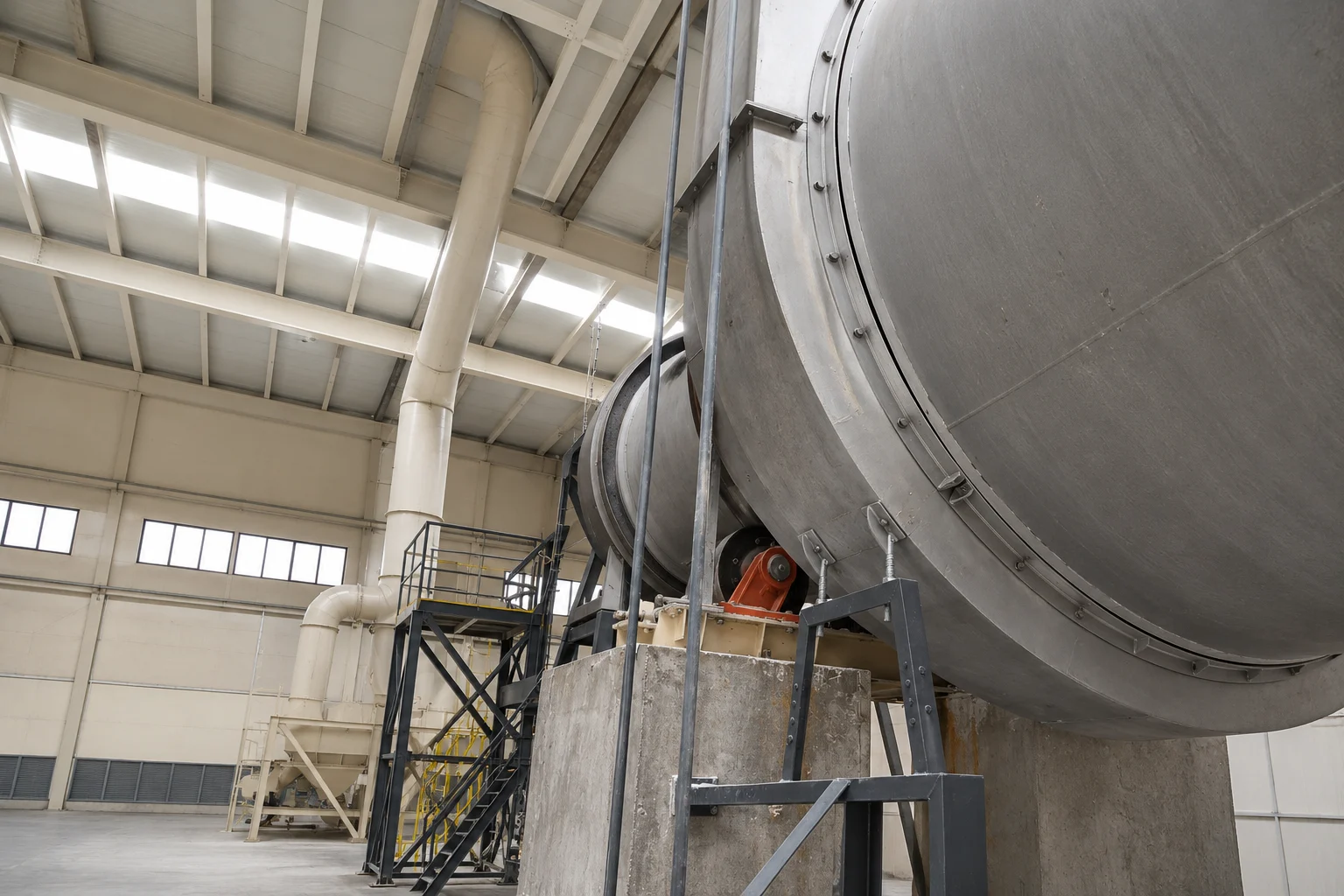
In rotary dryers, the material progresses through a rotating drum while being exposed to hot gas. Lifting flights inside the drum pick up the material from the bottom, carry it upward, and cascade it back down, forming a material curtain that ensures intensive contact with the hot gas.
This structure enables more uniform drying along the drum and supports efficient heat and mass transfer. The process flow can be configured as co-current or counter-current, depending on the application.
Operating Principle
Rotary dryers are durable and flexible systems preferred for high-capacity continuous drying processes. They can be used to dry a wide range of products in granular, crystalline, powder, or lump form. The drum diameter, length, slope, rotation speed, and internal flight structure are specifically designed according to the material's moisture content, particle size, stickiness, and process temperature. These systems provide a particular advantage in processes requiring high feed capacity. Thanks to the rotating drum structure, the product advances in a controlled manner along the drying line, and the process duration can be adjusted according to the product characteristics. When required, the system can be engineered as a complete drying line together with a hot air generator, cyclone, bag filter, fan, automation, and product feeding and discharge equipment.
Rotary dryers are widely used to reduce the moisture of industrial raw materials such as minerals, sand, limestone, fertilizer, biomass, construction chemicals, clay, and similar materials. Thanks to their robust body structure, continuous operating capability, and design adaptable to different process conditions, they offer a reliable drying solution for heavy-duty industrial applications.
Process Advantages
Single-Shell Rotary Dryers
Classic Drum Design for Continuous and Reliable Drying
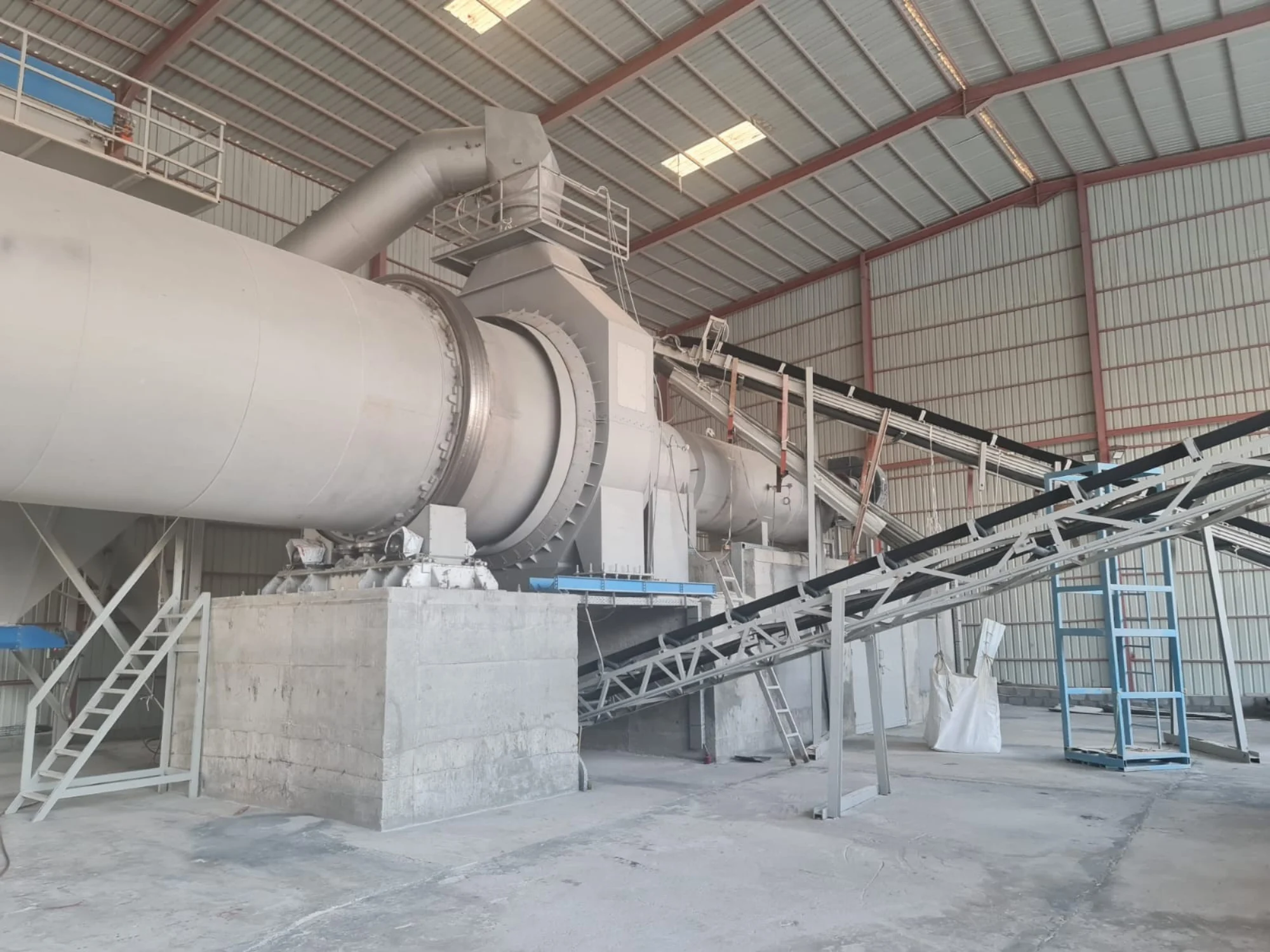
Single-shell rotary dryers are classic and robust systems used in applications that require continuous and reliable drying. The lifting flights inside the rotating drum pick up the material from the bottom, carry it upward, and cascade it back down, forming a material curtain that ensures intensive contact with the hot gas. This structure enables more uniform drying as the material progresses along the drum. Single-shell dryers stand out in applications requiring a durable mechanical design, continuous operation, and a simple yet effective drying solution; they can be designed and scaled to meet different capacity requirements.
Double-Shell Rotary Dryers
Compact Design with Extended Residence Time and Integrated Process Capability
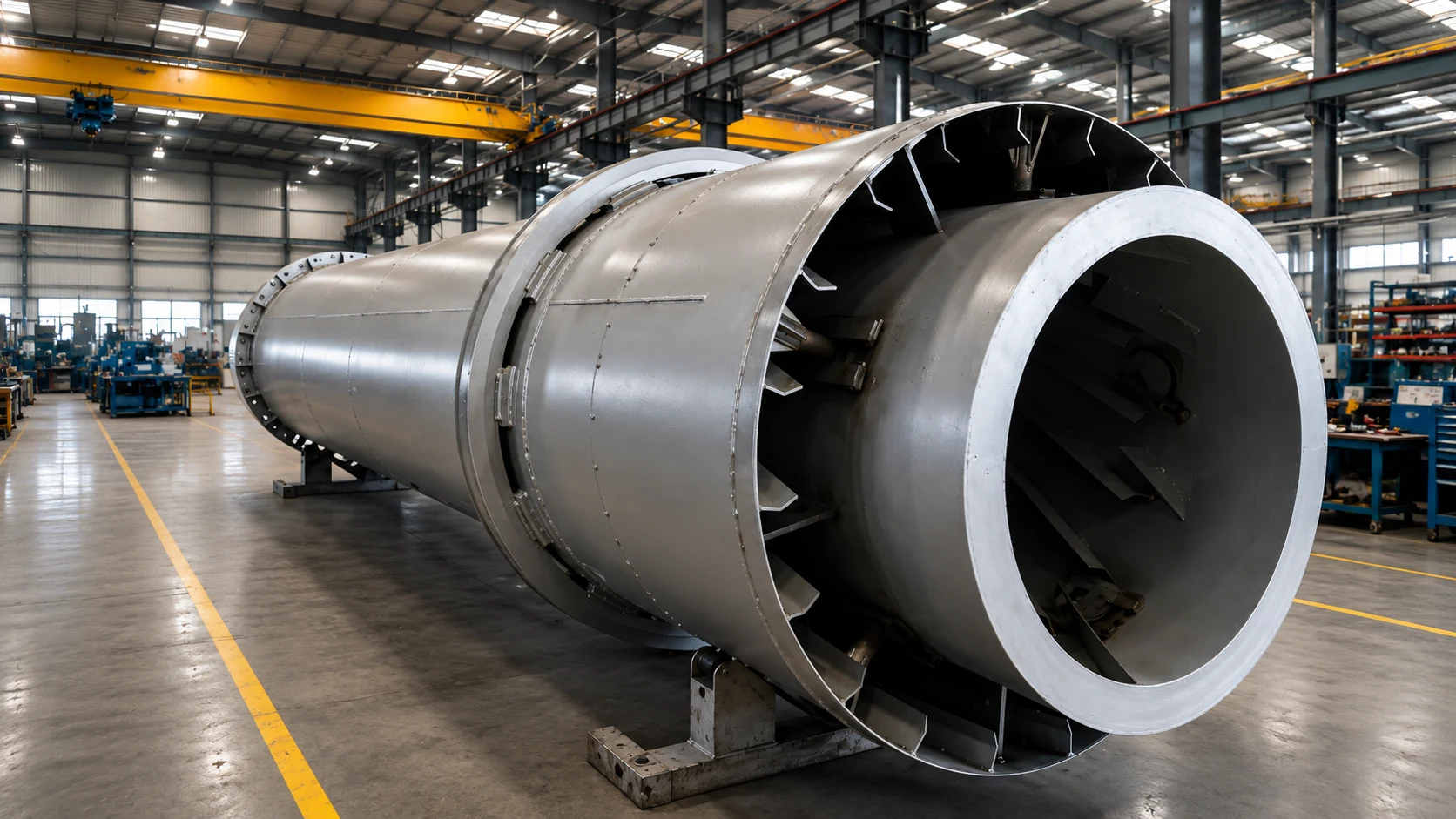
Double-shell rotary dryers are a strong solution for applications requiring longer residence time within a limited footprint. With a multi-pass design, the material progresses more controllably within the same equipment, allowing drying performance to be optimized in a more compact installation area. In processes where immediate cooling after drying is required, the double-shell configuration can enable drying and cooling to be combined within a single system. This approach provides advantages in plants with layout constraints and in more integrated process designs.
Suitable Materials and Applications
Rotary Dryers
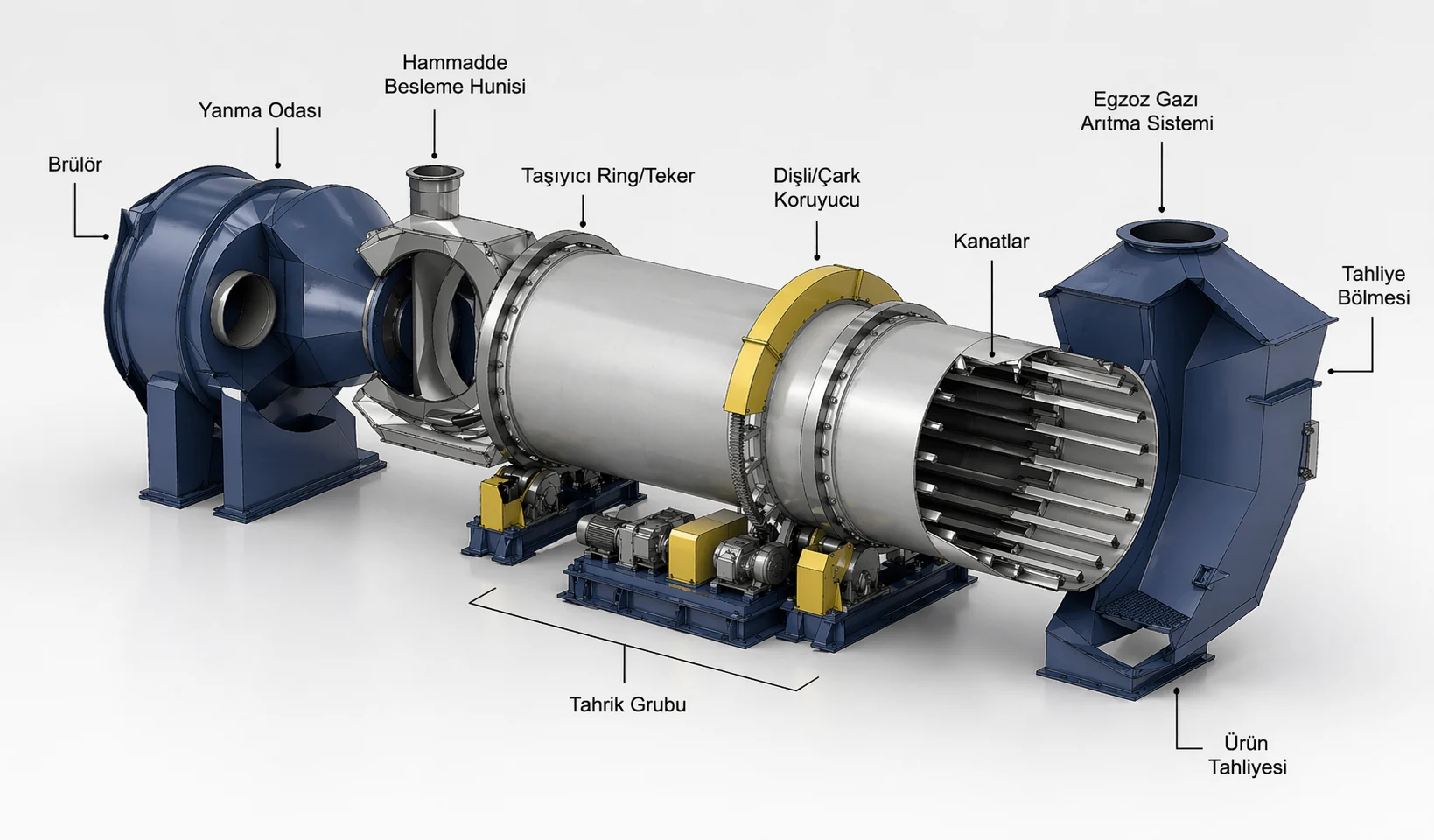
Rotary dryers are used for drying minerals, sand, aggregates, ore, slag, coal, recycling materials, fertilizers, and various chemical products. Due to their heavy-duty operating characteristics, they deliver strong performance especially with free-flowing and thermally robust powders, granular, and particulate materials. For temperature-sensitive products, careful conditioning of the drying air and precise control of process parameters become critical.