
ENIVO

Grinding

Industrial Grinding Solutions

Grinding is one of the most critical stages in achieving the target product fineness. Selecting the right mill type directly affects material hardness, abrasiveness, moisture content, target particle size distribution, and overall process design.

ENIVO provides project-specific grinding solutions for different mineral and industrial product groups with ball mills, pin mills, and hammer mills. These systems are configured to deliver efficient and reliable process performance in applications requiring fine grinding, controlled particle size reduction, and integrated classification.

Contents

Pin Mills
Ball Mills
Hammer Mills

Pin Mills

Flexible Solutions for High Fineness and Controlled Fine Grinding
Pin Mills

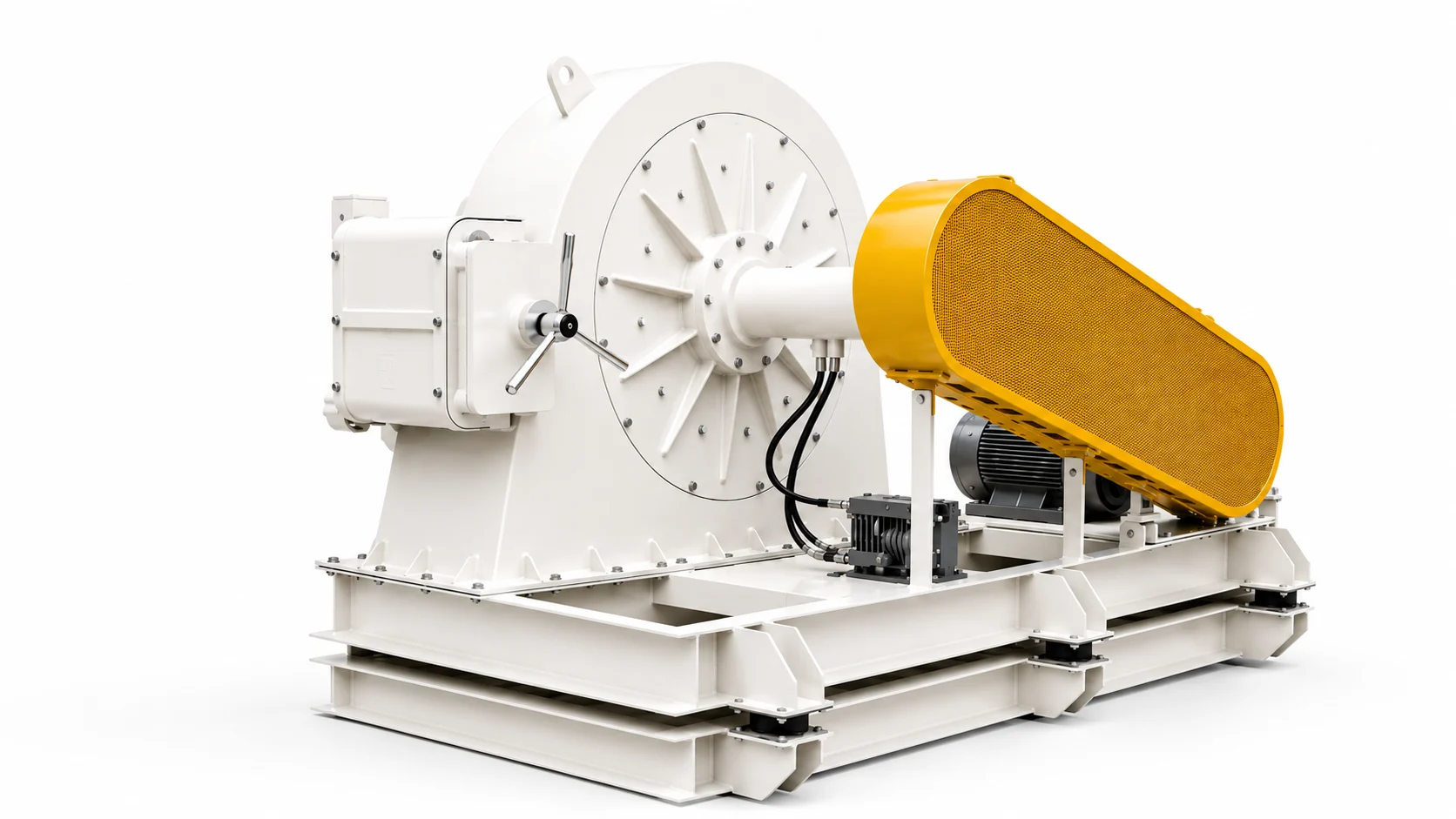
Pin mills provide an effective solution in applications requiring high fineness and especially in controlled fine grinding processes. Thanks to their counter-rotating pin disc design, they can operate at high relative speeds and deliver adjustable fineness for different products. This structure offers a flexible and efficient process for applications with demanding fineness requirements.

Operating Principle

Pin mills operate on the principle of grinding material through impact and friction between two counter-rotating pin discs at high relative speed. Product fineness can be controlled by adjusting disc speeds.

With relative speeds reaching up to approximately 250 m/s, high performance is achieved in applications requiring very fine product. Disc configuration and material feed rate directly affect product quality.

Process Advantages

High Fineness Capability: Very fine grinding targets can be achieved through high relative speeds.
Adjustable Product Size: Different fineness levels can be obtained by changing disc speed.
Compact and Efficient Design: Provides high grinding capacity in a small footprint.
Flexible Product Adaptation: Easily adapts to different product groups and material structures.
Low Energy Consumption: Energy consumption per unit product is controlled through the high-efficiency grinding principle.

Design and System Features

Application Areas

Counter-rotating dual pin disc design

Calcium carbonate fine grinding

Relative speed up to approximately 250 m/s

Mineral filler and pigment production

Adjustable disc speed and fineness control

Chemical raw material grinding

Pin configuration adaptable to different product groups

Construction chemical raw material preparation

Compact machine structure

Food and pharmaceutical fine powder production

Compatible with integrated classification circuits

Ceramic and glass raw material grinding

Easy maintenance and pin replacement

ENIVO positions pin mills as a critical grinding solution in applications where high fineness and product quality are determining factors. Product properties, target fineness, capacity requirements, and process integration are evaluated together to determine the most suitable machine class and configuration.

Ball Mills

Proven and Reliable Solutions for Wet and Dry Grinding

Ball Mills

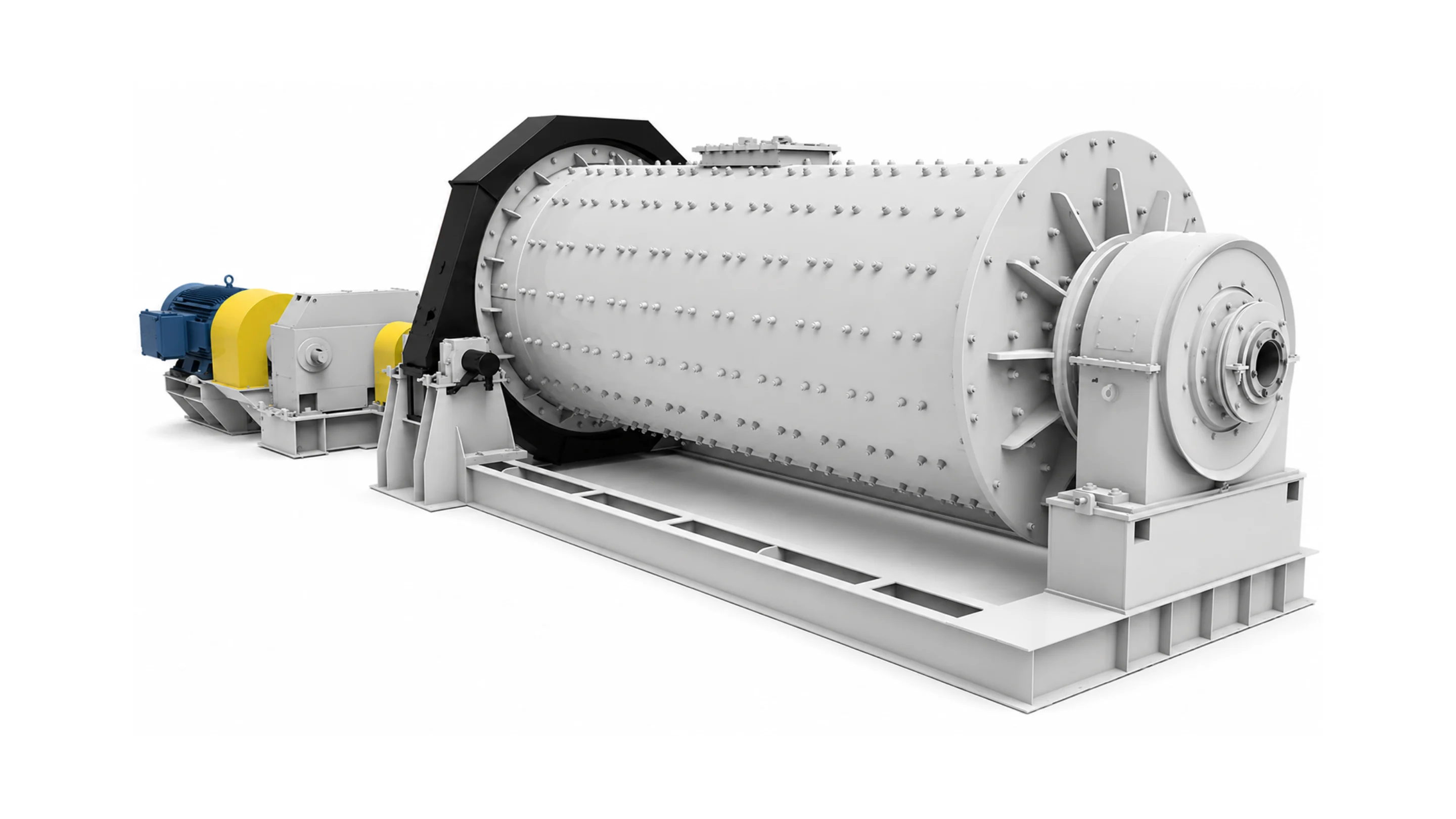
Ball mills are among the most established and reliable solutions used in wet or dry grinding. Freely moving grinding media inside the drum reduce the material size through impact and attrition. They provide an effective solution especially in applications where very fine product is required in dry hard grinding.

Operating Principle

Ball mills operate on the principle of grinding material through impact and friction using grinding balls and media inside a rotating cylindrical drum. Drum rotation speed, ball size, and filling ratio are the key parameters determining grinding efficiency.

When operating with a closed-circuit classification system, target product fineness can be controlled more precisely and over-grinding can be prevented.

Process Advantages

Wide Fineness Range: Fineness below 10 µm is achievable in dry hard grinding applications.
Wet and Dry Grinding Flexibility: Can be used in both wet and dry grinding applications.
High Capacity: Large-diameter drums can meet high capacity requirements.
Long-Lasting and Reliable: Simple and proven design ensures reliable operation over long periods.
Adaptability to Different Materials: Can be adapted to different material hardness levels through ball type and drum configuration.

Design and System Features

Application Areas

Cylindrical drum body design

Cement clinker and raw material grinding

Grinding media in various sizes and materials

Limestone and calcium carbonate grinding

Adjustable drum rotation speed

Quartz and feldspar grinding

Closed-circuit classification system integration

Mineral filler production

Wear-resistant liner options

Metallic ore grinding

Configurable for different capacity and fineness requirements

Ceramic raw material preparation

Powerful drive system for continuous operation

ENIVO considers ball mills as a fundamental grinding solution in applications requiring high capacity and very fine product. Material hardness, abrasiveness, target fineness, and capacity requirements are analyzed together to determine the appropriate drum size, ball configuration, and classification circuit.

Hammer Mills

Compact Grinding and Classification for Soft and Medium-Hard Materials
Hammer Mills

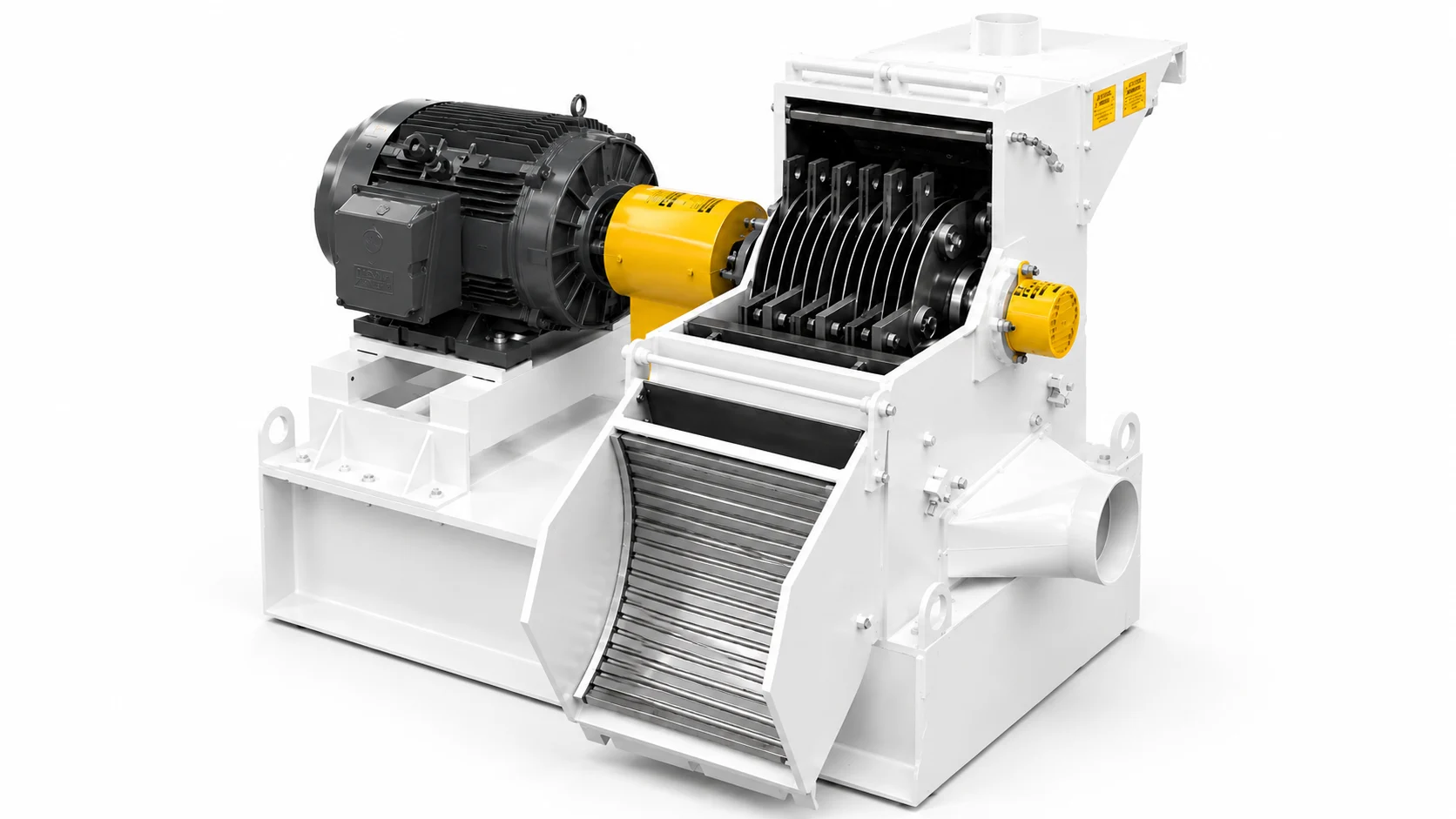
Hammer mills offer an effective solution in applications requiring fine grinding and in-line classification of soft and medium-hard materials. These systems stand out in compact process layouts. With the right system design, the product can be selected according to the target particle size and collected through a cyclone or filter.

Operating Principle

Hammer mills operate on the principle of breaking material through impact by high-speed rotating hammer elements. After being crushed in the grinding zone, material is separated to the target fineness through integrated classification or airflow.

An integrated solution is provided with the hammer rotor, grinding zone, classification/separation, and dust collection equipment. Typical product fineness is in the range of approximately 75-100 µm.

Process Advantages

Compact Process Layout: Grinding and classification are combined in a single line, providing a compact layout and small footprint.
Effective Fine Grinding: Fast and efficient achievement of target fineness with soft and medium-hard materials.
Integrated Classification: Product is classified in-line and collected directly via cyclone or filter.
Low Investment Cost: Fewer equipment items and a simple process flow reduce the total investment cost.
Easy Operation and Maintenance: Simple design and accessible hammer elements enable easy maintenance and operation.

Design and System Features

Application Areas

Hammer rotor and grinding zone design

Gypsum and lime grinding

Integrated classification and separation structure

Coal and lignite grinding

Product collection via cyclone and filter

Mineral filler production

Typical feed size approximately 0-10 mm

Construction chemical raw material preparation

Typical product fineness approximately 75-100 µm

Chemical raw material grinding

Compact and space-saving structure

Salt and similar soft mineral grinding

Adaptable to different products and capacity requirements

ENIVO considers hammer mills as an efficient process solution especially in compact line configurations and soft to medium-hard material grinding applications. Material properties, target fineness, capacity, and process integration are analyzed together to determine the most suitable system configuration.