
Mixing and Dispersion in Liquid Products
Mixing in liquid products is not limited to achieving a visually homogeneous appearance. The incorporation of solid raw materials into the liquid phase, wetting, breaking agglomerates, dispersing fine components, controlling viscosity, and, where required, providing a wet grinding effect must all be evaluated together. For this reason, the right mixer type is determined according to the product’s rheology, required mixing energy, dispersion level, and process stages. ENIVO evaluates these parameters together and provides the most suitable mixing solution for each product.
Liquid mixers are key pieces of equipment that directly affect product quality in the preparation of concrete admixtures, paints, coatings, pigment pastes, construction chemicals, and similar liquid or semi-fluid products. The right mixer selection should be determined according to the product’s viscosity, dispersion requirement, solid addition, batch volume, and process structure. ENIVO approaches liquid mixers not as a single type of equipment, but as different mixing technologies that should be selected according to product behavior. Solutions such as dissolvers, planetary mixers, universal mixers, and basket mills make it possible to choose the right mixing effect for each application.
Dissolver Mixers
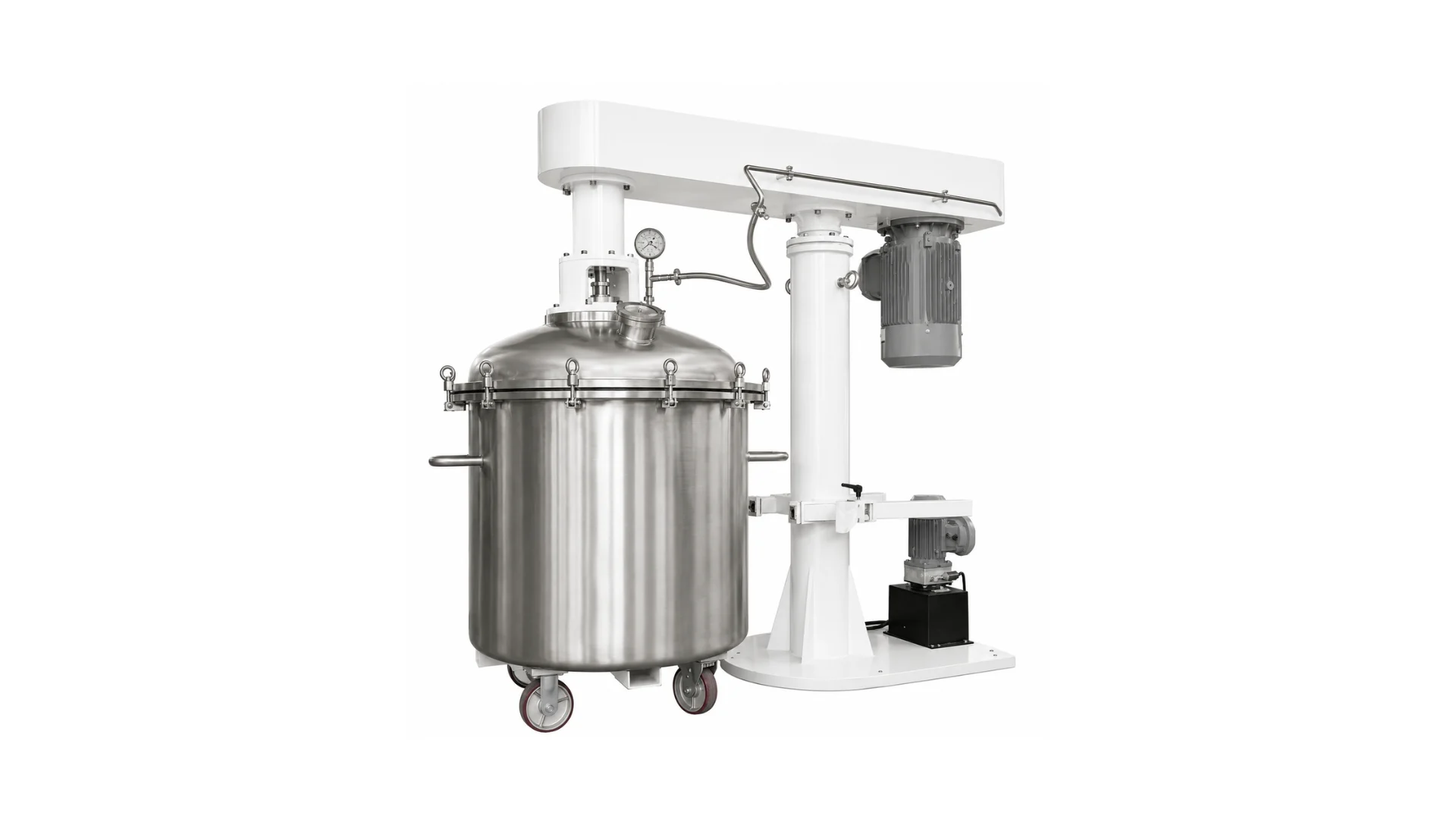
Dissolver mixers are high-speed mixing systems used in processes where solid raw materials must be incorporated into the liquid phase in a controlled manner, wetted, deagglomerated, and dispersed homogeneously. They create strong circulation within the product, helping the solid phase wet more quickly and distribute more evenly in the liquid phase. For this reason, they are an effective solution in solid-liquid formulations such as paints, pigment pastes, coatings, printing inks, construction chemicals, adhesives, and similar products. The main advantage of dissolver mixers is their ability to provide a controlled high-speed dispersion effect. In formulations where solid raw materials must be incorporated rapidly into the liquid phase, they shorten process time and improve premix quality. Their ability to operate with either fixed or mobile vessels also provides flexibility in plant design.
Planetary Mixers
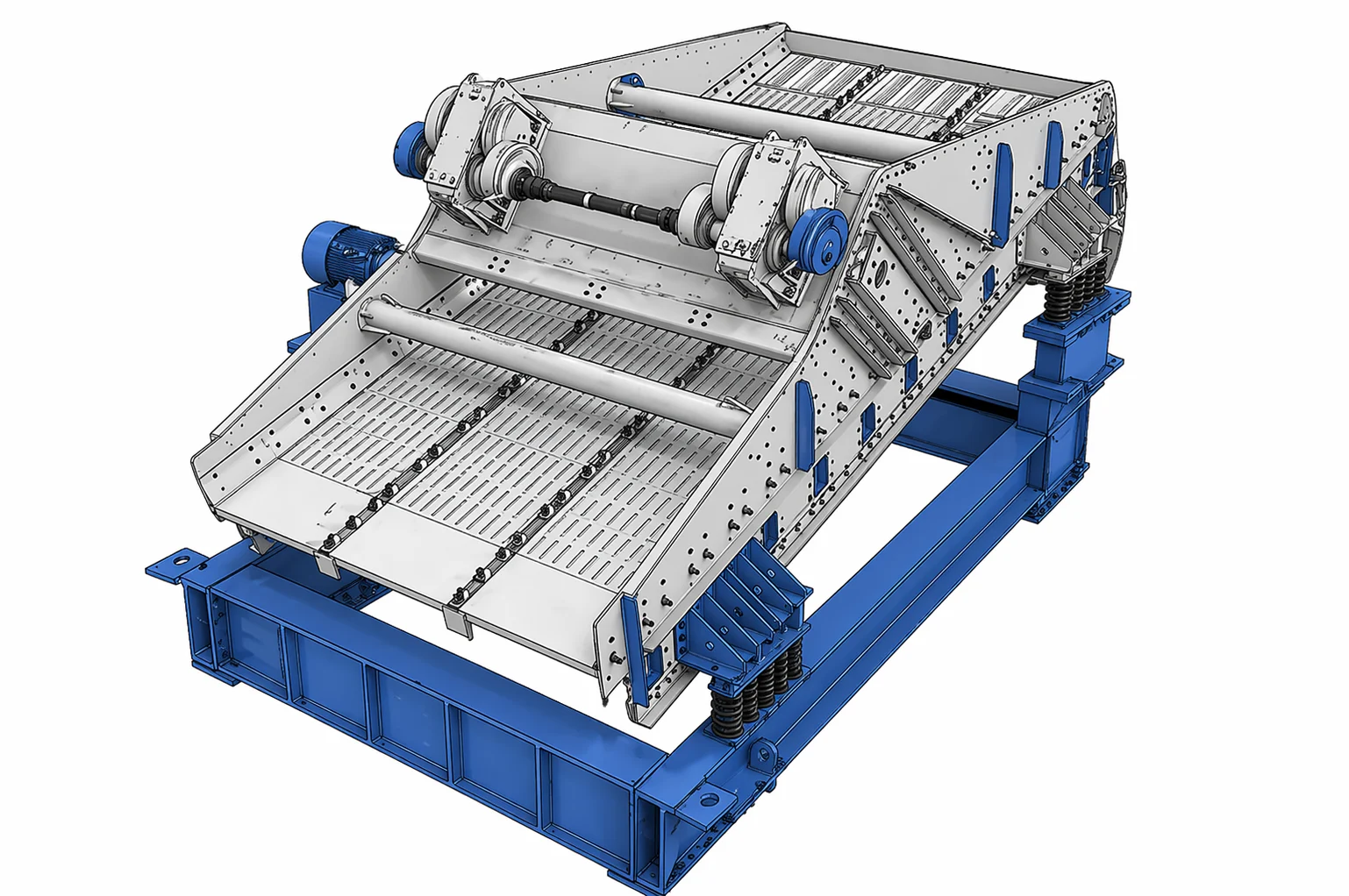
Planetary mixers are systems developed to provide effective mixing throughout the entire batch volume in medium and medium-high viscosity products. The mixing shafts rotate both around their own axis and in a circular motion within the vessel. Thanks to this movement, the product is carried throughout the entire volume, while material remaining near the vessel wall is returned to the mix by the scraper system. This structure provides important advantages in terms of homogeneity and product stability, especially in construction chemicals, putties, silicones, mastics, pastes, adhesives, plastisols, and polyurethane-based products. The strength of planetary mixers lies in their ability to provide not only mixing but also effective product movement throughout the entire batch volume in viscous products. In combined versions, the addition of a high-speed dispersing element can further enhance the dispersion effect. For this reason, they stand out in formulations requiring both homogeneous mixing and a controlled product structure.
Universal Mixers
Universal mixers are versatile systems that combine multiple mixing effects in the same body. This group may include butterfly mixers as well as two-shaft and three-shaft mixer solutions. They provide not only bulk mixing, but also dispersion, scraping, and intensive product movement, helping achieve a more homogeneous structure in high-viscosity formulations in a shorter time. For this reason, they are a strong solution in dense systems such as mastics, putties, silicone products, adhesives, polyester putties, printing inks, and similar products. The main advantage of universal mixers is that they strengthen process control in more demanding formulations by combining different mixing effects in the same system. The combination of high-speed disperser, main mixer, and scraper supports both homogenization and product movement in high-viscosity products. This structure helps achieve more efficient results in special formulations and high-capacity applications.
Basket Mill
Basket mill systems are specialized solutions used in processes where wet grinding and dispersion are required together, particularly in paints, inks, coatings, and pigment applications. Technically, they are not only mixers but also wet grinding and dispersion machines; however, since they combine mixing and fine grinding functions in a single vessel, it is meaningful to evaluate them within the liquid mixers category. They are an effective option for achieving fast and homogeneous dispersion in medium and low viscosity products. In this type of system, being able to perform dispersion and fine grinding in the same vessel makes the process more compact. Independent drive groups, temperature monitoring, and different grinding combinations also strengthen process control.
Design and System Features
Common Optional Solutions
Why ENIVO Liquid Mixers?
ENIVO does not try to adapt a single equipment type to every process in liquid mixing. Instead, it focuses on selecting the right mixing technology according to the product’s viscosity, dispersion requirement, solid addition, batch volume, and process flow. With this approach, the mixer type best suited to product behavior can be identified, dispersion and homogenization performance can be improved, more controlled mixing can be achieved in viscous products, and process reliability can be increased in special formulations. ENIVO Liquid Mixers provide reliable, flexible, and long-lasting solutions through correct equipment selection, a process-oriented engineering approach, and application-specific configuration options.